Storefront lock repair: what information speeds up the quote
When a storefront lock fails, time is rarely on your side. A business that cannot secure its entrance may have to close early, disrupt customers, or leave stock exposed. Getting a repair done quickly depends on how clearly you can describe the problem to the person who will fix it. The more details you provide upfront, the fewer back-and-forth calls are needed, and the faster the work can begin.
Understanding what a locksmith needs to know before they arrive helps you prepare. It also removes the guesswork from the initial conversation, so you can focus on running your business rather than chasing quotes. Below is a breakdown of the specific information that helps price a storefront lock repair accurately and efficiently.
The type of lock and its location
The first thing a locksmith will ask about is the kind of lock on your door. A standard key-in-knob set is different from a mortise lock, and a rim cylinder works differently from a jimmy-proof deadbolt. Each design has its own parts, labor time, and replacement cost. If you can identify the lock type by looking at the face of the door or by checking the brand name stamped on the cylinder, that saves time.
Location matters too. Is the lock on a single glass door, a pair of double doors, or a sliding storefront? A door that opens inward versus outward may require a different lock or mounting method. If the lock is part of a panic bar system, that changes the repair approach entirely. Panic bars are common on commercial exits, and a broken one can affect building code compliance as well as security.
Knowing the door material also helps. Metal frames and wood frames take different hardware and may need different drilling or tapping methods. A storefront with a metal frame and a glass insert may need special care to avoid cracking the glass during lock removal.
Whether the lock is part of a larger system
Many businesses do not rely on a single lock. They use a master key system where one key opens multiple doors, or they have an access control system linked to keypads, card readers, or mobile apps. If your storefront lock is connected to such a system, the repair may involve more than just replacing a cylinder. The master key might need to be re-pinned to match the existing set, or the access control software may need to recognize the new lock hardware.
Mentioning any related hardware upfront helps the locksmith bring the right tools and parts. For example, if you have a key cabinet that holds spare keys for the whole building, the repair might need to update that cabinet's key set as well. Similarly, a door closer that is out of alignment can put extra stress on a lock, so mentioning that symptom can point to a combined issue rather than a simple lock replacement.
The specific problem you are experiencing
Describe exactly what happens when you try to use the lock. Does the key not turn at all? Does it turn but not retract the latch? Does the lock feel loose or wobbly? Does the key go in and out smoothly? Each symptom points to a different cause. A key that will not turn could mean a worn or broken pin inside the cylinder, while a latch that does not retract often indicates a misaligned strike plate or a broken spring.
Also note when the problem started and whether it came on gradually or suddenly. A lock that has been getting harder to turn over several weeks may just need lubrication, while one that stopped working after someone forced it likely has broken internal parts. If the lock was recently rekeyed or repaired, mention that too, because a recent change can reveal a mistake in installation or a compatibility issue.
Watch for secondary signs: does the door scrape the frame when you open it? Does the lock bind only in hot weather or after rain? Environmental factors like temperature and moisture can affect metal parts and wood doors. A lock that works fine in the morning but sticks in the afternoon may be expanding from heat, which points to a door alignment problem rather than a lock defect.
Brand and model information
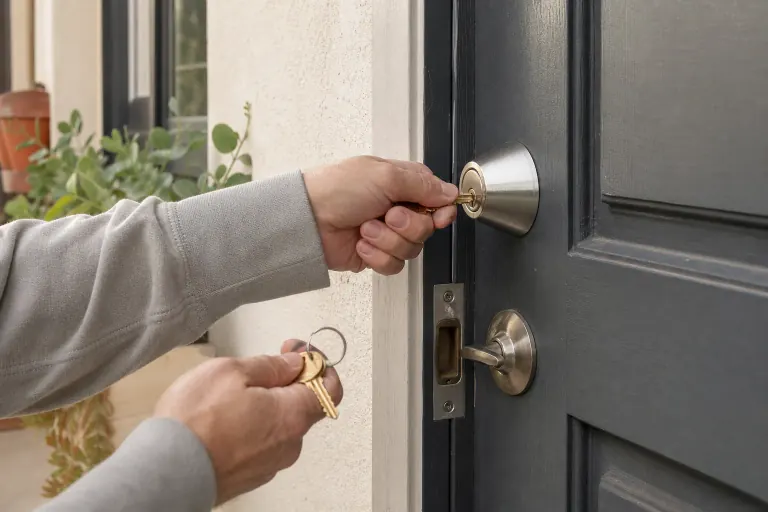
If you can find the brand name and model number on the lock, write it down. Common commercial brands include Schlage, Yale, Sargent, Corbin Russwin, and Baldwin, but many others exist. The model number is often stamped on the face of the cylinder or on the inside edge of the door near the latch. Having this information lets a locksmith check whether replacement parts are available and whether they need to order something special.
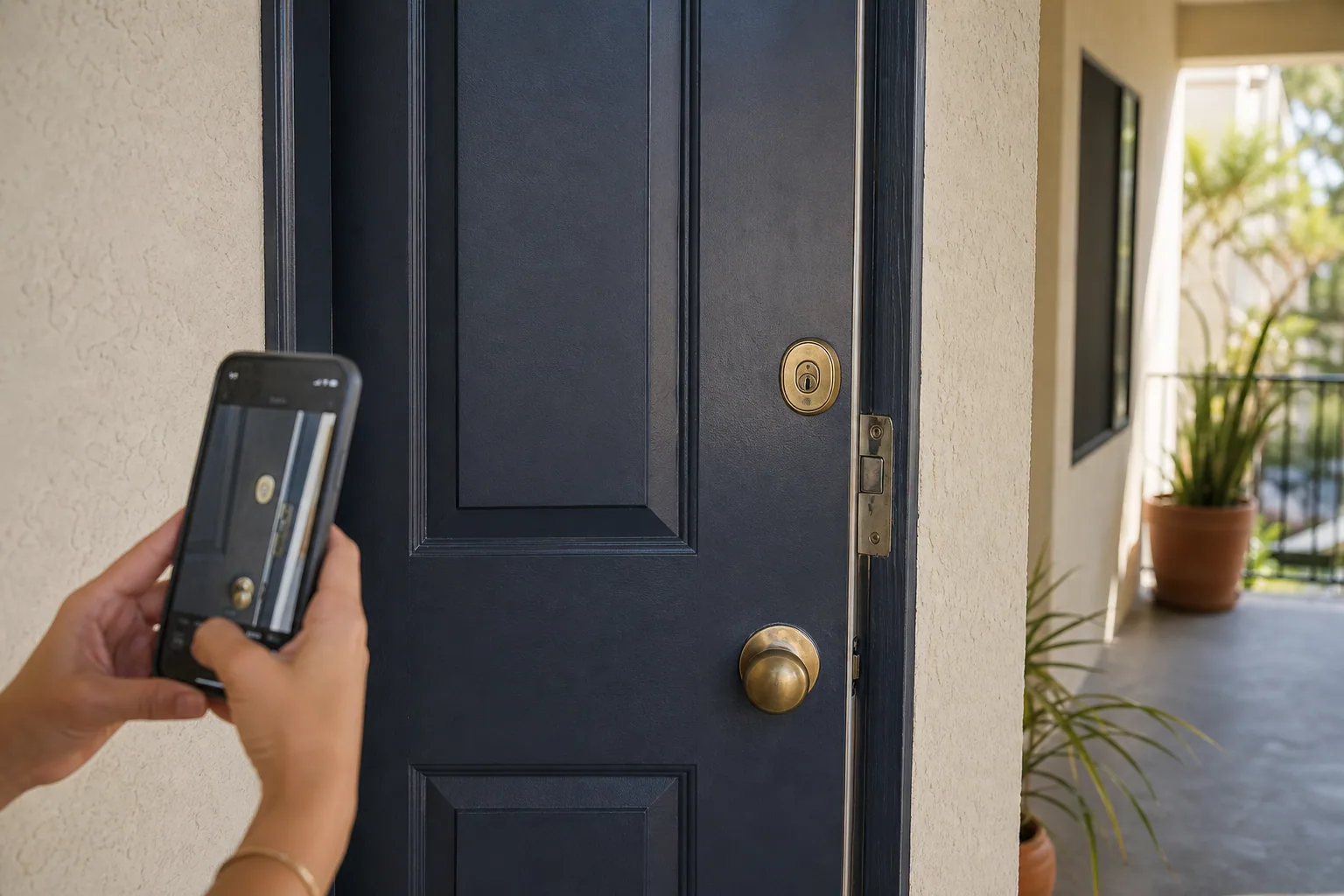
For panic bars, the brand and model are usually visible on the push pad or on the end cap. For access control systems, the panel or reader often has a label with the manufacturer and model. Even a photo of the lock and the door taken from a few angles can be more helpful than a long description. Many locksmiths accept photos by text or email, and a clear image can reveal details you might not think to mention.
Business hours and access constraints
A storefront lock repair often has to happen outside normal business hours to avoid disrupting customers. Tell the locksmith when the building is occupied and when you can grant access. If you need the repair done before opening the next morning, say so. If the lock is on a back door that is only used by staff, that may allow more flexible timing than a main customer entrance.
Also mention any security systems that might be affected. If the door has a magnetic contact that triggers an alarm, the locksmith needs to know how to disarm it temporarily. If the lock is tied to an access control system, the repair might require the system to be placed in bypass mode. Providing this information prevents accidental alarms or lockouts during the work.
Whether you have spare keys or a working key
If you have a key that works, even if it is for a different door in the same master key system, the locksmith can use it to check the keyway and bitting. That helps them cut a new key or re-pin the cylinder to match. If you have no working key at all, the locksmith may need to pick or drill the lock, which adds time and cost. Mentioning that you have or do not have a working key is straightforward but often overlooked.
If the lock is on a high-security system that uses restricted keyways, the locksmith may need authorization from the manufacturer to duplicate keys or replace cylinders. Knowing this ahead of time avoids a wasted trip. Some commercial locks require a special key card or proof of ownership to order replacements.
The value of calling a commercial locksmith
A storefront lock is not the same as a residential door lock. The hardware is built to handle heavier use, and the security requirements are often stricter. A commercial locksmith carries the right inventory for these systems and understands the local building codes that apply to commercial exits. They can also advise on upgrades, such as moving to a high-security cylinder or adding access control, if the current setup is outdated or vulnerable.
When you call for a repair, ask whether the locksmith regularly works on storefront doors. Not every locksmith carries the parts for panic bars or commercial cylinders. Confirming their experience with your type of lock saves time and prevents having to call a second person. A commercial locksmith will also know how to handle the paperwork if your insurance or landlord requires a record of the repair.
What to have ready when you call
Before you pick up the phone, gather the following:
- Lock brand and model number (if visible)
- Door location (front, back, side, or interior)
- Exact symptom (key does not turn, latch does not retract, lock feels loose)
- Whether the lock is part of a master key or access control system
- Business hours and preferred repair time
- Whether you have a working key
Having these details ready turns a vague inquiry into a clear request. The locksmith can give a more accurate estimate and arrive prepared with the right tools and parts. It also reduces the chance of needing a second visit because a missing part or wrong information was discovered halfway through the repair.
A storefront lock repair does not have to be a stressful interruption. The more specific you can be about the lock, the problem, and the access situation, the smoother the process goes. Taking a few minutes to look at your door and note what you see pays off in a faster, more predictable fix.
Ends · SAFEENTRYHOME